 - English
 - Deutsch
 - Français
 - Nederlands
What’s happening to the polo in 2026?
 Cat Bridges • 1 May 2026 • 4 min read
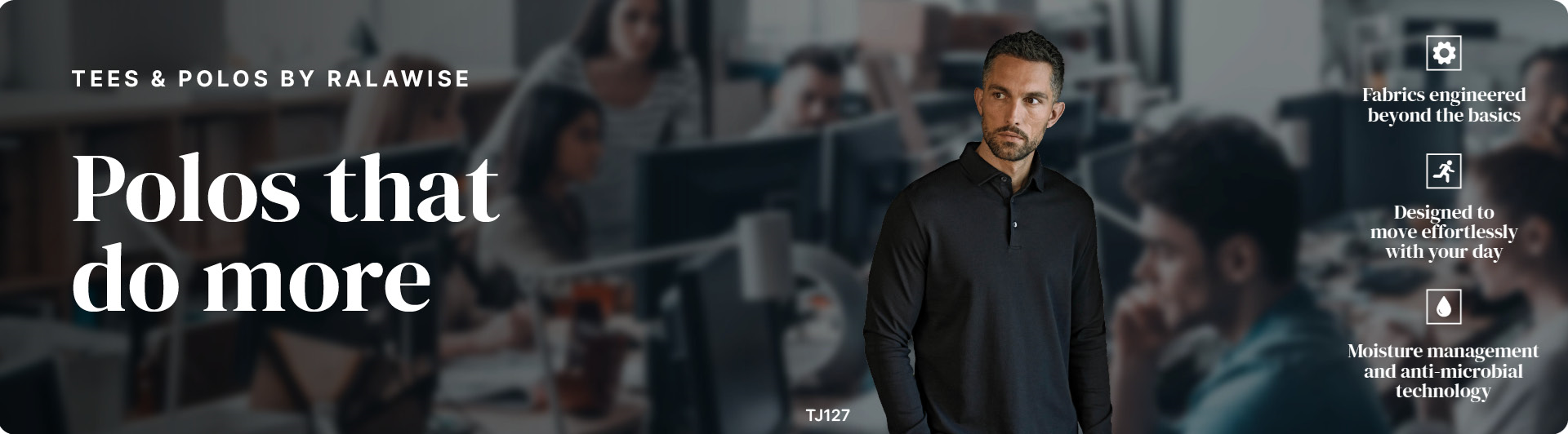
The polo has always been the hardest-working piece in the wardrobe. Smart enough for front-of-house. Comfortable enough for an eight-hour shift. Practical enough for sport. Now, in 2026, it’s doing even more.
Fabric technology has moved on dramatically. Moisture management, antimicrobial protection, sun defence, sustainable fibres – these aren’t premium extras anymore. They’re the new standard. For decorators and resellers able to articulate the many benefits of this evolution, the opportunity is significant.
Clients who once asked for “a polo in navy” increasingly want to know: is it breathable; will it hold its shape; will it keep my team fresh through a whole shift?
The polo market is moving fast and the brands leading the charge are bringing genuinely exciting products to market.
Here’s what to keep a close eye on in 2026.
Which fabric technologies are transforming the modern polo?
Moisture-wicking
Moisture-wicking is the foundation of modern performance polo engineering. Instead of absorbing sweat, wicking fabrics draw moisture away from the skin and push it to the surface of the fabric, where it quickly evaporates. The person wearing it stays dry and comfortable, even in demanding conditions.
The important thing is whether the wicking is short-lived or permanent.
Some treatments wash out over time. Look for wicking built into the yarn itself – like the CoolPlus® technology in Henbury’s CoolPlus® polo shirt (HB475), rather than applied as a surface finish.
Permanent wicking delivers consistent performance, wash after wash, which is especially useful for staffwear, sportswear or any frequently-used garment.
Antimicrobial and ion-charge technology
This is where the polo gets genuinely exciting. Ion-charge technology uses advanced chemistry at the fabric level to control odour and stop bacteria growth. It’s not a surface treatment but is built into the fibre.
Garments stay fresher for longer; and, for decorators, the cationic dyeing that typically accompanies ion-charge technology means zero dye migration, as well as prints that look great and are long-lasting.
UPF sun protection
UPF – Ultraviolet Protection Factor – is a rating that tells you how effectively a fabric blocks UV radiation from the sun. A polo rated UPF 40+ blocks 97.5% of UV rays. For any client operating outdoors – landscape gardeners, groundskeeping teams, outdoor events staff, sports coaches, resort workers – it’s a meaningful benefit that adds genuine value to the product conversation.
Sustainable and preferred materials
Responsible sourcing matters – and clients across every sector increasingly want to know what their products are made of and where they’re from. Recycled polyester and organic cotton are materials that carry recognised sourcing credentials – so when a client asks, you have a clear answer.
Looking to prioritise organic materials and recycled poly polos? Then how about Nike’s Velocity solid polo (NK430)?
The TEE JAYS and Stanley/Stella ranges also offer premium options with stretch comfort and clean rebranding solutions – increasingly popular as corporate clients look to align their ESG commitments.
Which modern polos should resellers stock in 2026?
The technology story isn’t abstract – it maps directly onto products that are available right now.
For a single polo that combines multiple technologies, you’ll be hard pushed to beat the TriDri® ion-charge panelled polo (TR505). Features include recycled polyester construction, ion-charge antimicrobial technology, built-in moisture-wicking and UPF 40+ sun protection, plus cationic dyeing for clean, durable print results. One polo – a fabulous story to tell.
For clients where sustainability is key, the B&C My Eco Polo 65/35 (BA265) and Stanley/Stella’s Stanley Coaster (SX264) both deliver solid credentials.
The BA265 is built from a blend of certified recycled polyester cotton, woven into a lightweight piqué construction that breathes well and carries decoration cleanly. The label-free finish makes rebranding straightforward.
The SX264 is made from 100% organic cotton in a fine piqué construction, pre-washed at the panel stage for improved softness and shrinkage control. It’s finished with buttons made from recycled materials.
For a reliable, permanent-wicking workhorse ideal for staffwear and sport, Henbury’s HB475 is a strong option – permanent CoolPlus® yarn technology and 180gsm micro piqué in a wide colour range.
Looking for recycled polyester with print performance built in? Asquith & Fox’s PRINTGUARD recycled polyester polo (AQ001) combines moisture wicking with PRINTGUARD cationic dyeing for zero dye migration, strong colour retention and a contemporary fit that works for both workwear and sport.
What are the commercial benefits of new fabric technologies?
Fabric technology gives you something to talk about beyond price and colour.
When a client asks for a polo, here’s your opportunity to talk about freshness and comfort for hospitality teams on their feet all day. You can offer sun protection to outdoor-event clients who haven’t thought to ask for it. You can help a corporate client align their branded garments with their ESG commitments.
These aren’t upsells for the sake of it. They’re genuine product benefits that improve the experience for the end wearer; and they help your clients look like they’ve thought carefully about what they’ve ordered.
Professional and hard-working, the polo has always been versatile. In 2026, it’s intelligent, too.
That’s a story worth telling – and a product worth selling.